Tuesday, November 29, 2011
We Aren't! ... Penn State! Part I
Thursday, October 27, 2011
Election 2011 Initiative Endorsements
Thursday, October 6, 2011
Blast from the Past. My NHL Realignment Proposal
Most reported re-alignment proposals have some version of the Detroit Red Wings and/or Columbus Blue Jackets moving to the Eastern Conference. The Red Wings, the Blue Jackets, and the Nashville Predators have been clamoring for an eastward move for some time now, and they have very good reasons. As members of the Western Conference and Central Division, these 3 teams play teams in the Pacific and Northwest Divisions 4 times per year-- twice at home and twice away. Currently, 5 NHL teams play in the Pacific time zone (Vancouver, San Jose, L.A., Anaheim, and Phoenix), and 3 more play in the Mountain time zone (Calgary, Edmonton, Colorado). Most NHL games start between 7 and 8 p.m. local time. That means the Wings, Jackets, and Predators each play up to 10 games per year that start after 10 p.m. Eastern time, and up to 6 more that start after 9 p.m. That's nearly 1/5 of the 82-game regular season finishing after most of their fans' bedtimes. And there must be a lot of bleary eyes in Michigan offices the day after playoff road games against a Pacific or Mountain team. Factor in the increased travel mileage, and this is a significant problem.
But moving the Red Wings to the eastern conference would break up one of the oldest and fiercest rivalries in the NHL and all of sports-- the Red Wings' rivalry with the Chicago Blackhawks. These two original 6 franchises have been in the same division (or same league when there were no divisions) for more than 80 years; and Detroit and Chicago teams play in the same division in the NBA, NFL, and MLB. Surely there must be a way to solve the travel and time zone problem without putting the Wings and Hawks in opposite conferences where they might not even face each other twice a year.
Meanwhile, proposals I've seen generally have the reborn Jets in a "Central" type division with Minnesota, Chicago, St. Louis, and others. I think most Winnipeggers would rather be re-united with their old Western Canadian rivals in Edmonton, Calgary, and Vancouver, even if it would mean staying up late to watch some of the road games.
Fortunately, I have devised a divisional alignment that would solve most travel and time problems while preserving most traditional rivalries. I say do away with conferences altogether. Divide the 30 NHL teams into 4 divisions of 7-8 teams. Every team would play 42 games against their division mates (7 games each in 7-team divisions, 6 games each in 8-team divisions). Then, they play twice per year against most of the rest of the league (1 home, 1 away) and only once against the other teams. Who you play once and who twice would rotate year-to-year, though some allowances could be made for extra "rivalry games" against teams who aren't in your division (e.g. Toronto-Montreal, Winnipeg-Minnesota, Boston-Buffalo). Best of all, we get to bring back the old divisional names-- Adams, Patrick, Norris, and Smythe! If there are no franchise relocations (a big if, I'll address this topic later), the divisions break down as follows:
Smythe Division (8 teams):
Winnipeg Jets
Edmonton Oilers
Calgary Flames
Vancouver Canucks
San Jose Sharks
Los Angeles Kings
Anaheim Ducks
Phoenix Coyotes
Norris Division (7 teams):
Ottawa Senators
Toronto Maple Leafs
Buffalo Sabres
Columbus Blue Jackets
Detroit Red Wings
Chicago Blackhawks
Minnesota Wild
Patrick Division (8 teams):
Montreal Canadiens
Boston Bruins
New York Rangers
New York Islanders
New Jersey Devils
Philadelphia Flyers
Pittsburgh Penguins
Washington Capitals
Adams Division (7 teams):
Carolina Hurricanes
Tampa Bay Lightning
Florida Panthers
Nashville Predators
St. Louis Blues
Dallas Stars
Colorado Avalanche
The playoff format would return to that used in the 21-team era of the 80s and early 90s. The top 4 teams in each division make the playoffs. 1st place plays 4th, and 2nd plays 3rd. The two winners in each division play each other in the 2nd round. Then, the 4 divisional winners are re-seeded based on regular season records for the Stanley Cup Semifinals, with those 2 winners obviously squaring off for the Cup.
Now, allow me to pre-emptively address some of your questions:
1. Are you crazy? How can you put the St. Louis Blues in the Adams Division with all those Southern teams? They belong back in the Norris!
The Adams Division is the one division in my configuration that bears almost no resemblance to its earlier incarnation, although 2 teams from the Old Adams (the erstwhile Quebec Nordiques and Hartford Whalers, N.K.A. the Avalanche and Hurricanes) are in the New Adams. The core of this division are the Sun Belt teams, but some unfortunate soul who's a better fit in the Norris had to be its 7th team. I went back and forth several times on whether that team should be the Blues or the Blue Jackets (geographically, both cities are essentially on the border between Midwest and South) before deciding on St. Louis.
The Jackets are only 11 years old, and they've been wildly mismanaged most of their existence. Their fan support may be limited now, but it has the potential to be stronger if the team could ever start winning. What ultimately keeps the Jackets in the Norris Division is the potential rivalry between them and the Red Wings-- Ohio State vs. Michigan with the colors reversed.
Meanwhile, the St. Louis Blues might be the most nondescript franchise in all of professional sports. They've never won a Stanley Cup, and they've never really come close. The Blues made the Finals a few times in their earliest years of existence, but that was due to the NHL's odd divisional alignment at the time. When the NHL expanded from 6 to 12 teams in 1967, the 6 expansion teams were in one division, with the "Original 6" in the other. So, an expansion team was guaranteed a spot in the Finals every year... it was like playoff affirmative action. The franchise has no memorable moments or signature players. Every great player who's played for the Blues in the last 25 years-- Brett Hull, Adam Oates, Brendan Shanahan, Chris Pronger, Al MacInnis, Curtis Joseph-- has spent a significant portion of his career with other teams, and is generally better known as a player for someone else. To find "Mr. St. Louis Blues," you probably have to go back to Bernie Federko, a player who most St. Louisans have probably long forgotten. It's strange how a franchise can play in the NHL for 4 decades and leave such a small footprint, but that's why the Blues and not the Blue Jackets are severed from their Midwestern Brethren.
2. Didn't we try that whole "play lots of divisional games" thing and get rid of it?
After the lockout ended, the NHL played 2 or 3 seasons where each team played its divisional rivals 8 times, and only played 10 total games against the opposite conference-- 5 home, 5 away. So, this meant that if you're a fan in Vancouver, you only get to see Sidney Crosby or Alexander Ovechkin in your building once every 3 years. That was the real problem. Under the system I've devised, you'd see most of the teams outside your division once per year, with an occasional off year. As with the current NHL schedule, you're guaranteed to see every team at least once in 2 years.
3. What happens if the Coyotes / Islanders / etc. relocate?
The Islanders are tied to their lease in Nassau County through 2015 (though as we know from the Sonics' hijacking, that doesn't necessarily mean anything), while the Coyotes have had one foot out the door for several years now. The NHL owns the franchise, and it's hanging on in Arizona by the thin thread of a series of one-year agreements between the NHL and City of Glendale, where Glendale covers the league's operating losses. So, the 'Yotes seem more likely to leave sooner. Here are the possible destinations:
A. Southern Ontario (Toronto area or Hamilton): Easy alignment fix, the Coyotes would just hop into the Norris Division, giving the Norris 8 teams and the Smythe 7. Side note-- if I were in charge of these things, I'd endorse the team moving to metro Toronto, but not Hamilton. An NHL team in Hamilton would cut too much into the Sabres' already limited turf.
B. Houston or Kansas City: The Coyotes would join the Adams Division, allowing either St. Louis to move to the Norris or Colorado to the Smythe (to consolidate all the Pacific and Mountain Time Zone teams into one division).
C. Seattle: I want to believe, really I do, that a new arena really is in the works that could bring NHL hockey to my hometown for the first time, and bring back the Sonics. I've seen occasional chatter about Steve Ballmer and this or that business mogul "looking into" the possibility of building an arena in Bellevue. But as yet it's all rumor. Maybe it'd become a reality in time to grab the Islanders in 2015, maybe not. Either way, a Seattle NHL team would play in the Smythe Division.
D. Quebec City: As thrilled as I am to see the Jets back, I'm not buying the Nordiques' return to the NHL just yet. In addition to being a small market, Quebec City had problems in its last NHL go-around by being a hotbed of Quebec Separatist extremism (a sharp contrast with more cosmopolitan Montreal, where most people speak English and Separatist support was tepid). The political climate is changing, though. The Separatist Bloc Quebecois Party lost most of its seats in Parliament in the last national election, so maybe things are different now.
If the Coyotes moved to Quebec, they'd have to be in the same division as Montreal. So, that'd require moving Montreal to the Norris and kicking someone (maybe Buffalo or Columbus) to the Patrick. Or, the New Nordiques would join the Patrick, and someone (Boston or Pittsburgh most likely) shifts to the Norris. Or Washington gets exiled back to the Southern Tier / Adams Division.
Unless the Islanders moved too. Then the Nordiques would just take their spot, and the Isles would probably move to one of the above places. Lather, rinse, repeat.
Tuesday, September 20, 2011
SyrACCuse-- Don't Hate the Playa, Hate the Game
However, the "traditional rivalry" and "geographic sense" ships sailed out of the NCAA's harbor years ago. In the current college sports world, football money and mammoth TV rights deals trump everything. Conferences must eat or be eaten, and colleges that aren't in one of the big money super conferences will lose millions of dollars and won't be able to compete with the "in" teams. Some media pundits, namely ESPN commentators Dana O'Neil and Gene Wojiechowski, have blasted their outrage guns at Syracuse and (to a lesser extent) Pitt, placing all the blame for the current regrettable situation at our feet. We're greedy, hypocritical sell-outs, etc. etc. But this rage is misguided, not to mention extremely hypocritical itself, as detailed here by Syracuse Blog Troy Nunes Is An Absolute Magician. Notre Dame Athletic Director Jack Swarbrick also attacked SU and Pitt for our lack of conference loyalty... which coming from anyone at Notre Dame (who has kept its football team independent in order to keep its exclusive national TV deal with NBC, and to avoid sharing its ever-dwindling bowl game payout revenue) is so hypocritical as to be funny.
In the words of my college graduation speaker, we didn't start the fire; and we-- SU and Pitt by ourselves-- don't have the power to extinguish it. In ideal world, moving to the ACC wouldn't be necessary, and everyone would still play in geographically-sensible conferences with long and tradition-rich histories. Oh yeah, and the "student athletes" would take their studies seriously and no one would ever get "improper benefits" from boosters. Har har har. But in the real world, college sports is a business, and a largely unregulated business at that. SU and Pitt are businesses, and they have to make the right business moves. In an unregulated marketplace, that means being proactive and joining the ACC. Hate the game, don't hate the playa. The real blame for this sorry state of affairs falls upon the NCAA and the massively corrupt system it oversees, not on individual universities.
As we did in the summer of 2010, it now appears we are standing on the brink of an alignment with four 16-team super-conferences. But conference realignment has traveled a long and winding road to get here. Let's take a trip down that road, shall we? Timeline style!
1987: The NCAA gives the "death penalty" to SMU Football, which ends all corruption in college sports (for about 7.2 minutes). This deals a major blow to the Southwestern Conference (SWC), and is cited by most as the beginning of the SWC's demise.
1990: Notre Dame negotiates its own TV deal with NBC for $38 million... which was a lot of money in 1990. This enables / encourages Notre Dame to keep its football team independent, but the Irish's other sports join the Big East in 1995.
1991: Arkansas leaves the SWC for the SEC. The SEC also adds South Carolina, giving the conference 12 teams. Meanwhile, previously independent Penn State and Florida State join the Big Ten and ACC, respectively.
1991: The previously basketball-only Big East starts playing football, with Miami (Fla.), Virginia Tech, West Virginia, Temple and Rutgers (*cue derisive laughter) joining the only 3 Big East basketball schools who played Division I-A football at the time-- Syracuse, Pitt, and Boston College.
1992: The SEC plays its first football season with 12 teams, and holds college football's first ever conference championship game, bringing in $324 gazillion in TV and sponsorship money.
1996: The SWC disbands. Texas, Texas A&M, Texas Tech, and Baylor join the Big 8 conference, transforming it into the Big 12. The Big 12 holds a conference title game, bringing in gazillions in TV and sponsor money, but not as many gazillions as the SEC. Other former SWC members are left to forage in dumpsters, AKA the Western Athletic Conference (WAC)...
1996: After absorbing TCU, SMU, and Rice from the SWC-- as well as adding UNLV, Tulsa, and San Jose State-- the WAC becomes the first 16-team conference, yet it's anything but super.
1999: Frustrated with the WAC's dilution of rivalries and the logistical difficulties of a 16-team conference stretching from Houston to Honolulu, 8 WAC members break off to form the Mountain West Conference (MWC). (The MWC's charter members were Air Force, BYU, Colorado State, New Mexico, San Diego State, UNLV, Utah, and Wyoming.) This proves to be the only example in the last 25 years of conference contraction, motivated by geography and tradition. Shockingly, it didn't last.
2004: The Big East expels Temple (a football only member) for chronic suckage.
2004: Miami (Fla.), Virginia Tech, and Boston College announce they will leave the Big East for the ACC. Originally, the ACC wanted Miami, BC, and Syracuse; but the Virginia state government intervened and pressured UVA to veto any ACC expansion unless Va. Tech was included. Miami and Va. Tech join the ACC's 2004 football season, and BC enters a year later. Once at 12 members, the ACC begins holding a conference championship game, and money flows in like Niagara Falls.
2005: The Big East poaches Cincinnati, Louisville, and South Florida from Conference USA (as well as DePaul and Marquette in basketball) to replace those who departed for the ACC. The Big East becomes a 16-team basketball behemoth, perhaps the deepest basketball conference in history. But football-wise, this was rather like replacing Peyton Manning with Kerry Collins.
2005: The Mountain West (remember them?) adds TCU.
2010: The Big 12 begins to collapse. Nebraska leaves for the Big "Ten." A blockbuster deal that would have sent Texas, Texas A&M, Texas Tech, Oklahoma, Oklahoma State, and Colorado to the "Pacific" 10 falls through. The Pac-10 instead adds only Colorado from the Big 12 and Utah from the MWC. Unlike its math-challenged brethren, the Pac-10 changes its name to the Pac-12. However, the Big Ten conference now features 12 teams while the Big 12 has 10, a fact that confuses drunk people everywhere. The Big 12 survives and exacts a pound of flesh in relocation fees from Nebraska and Colorado, but it loses its lucrative conference championship game.
2010-11: One step forward, three steps back for the poor MWC. The conference adds Boise State, only to see charter member Utah bail for the Pac-12. Fellow charter member and arch rival BYU becomes independent for football and moves its basketball teams to the West Coast Conference (WCC). And, to complete the MWC gut punch, TCU announces it will leave and join the Big East. Because nothing says "Big East" like Fort Worth, Texas. The MWC replenishes its ranks by raiding Fresno State, Nevada, and Hawaii (football only) from the WAC, to begin in the 2012 season.
And that doesn't even include the constant shifting that has taken place in lower tier conferences like Conference USA, the Mid-American Conference (MAC), and the (post-MWC split) WAC over this same time period. I will now briefly pause to allow your head to stop spinning...
At every step of the way, the NCAA stood idly by as powerful conferences became more powerful at the expense of less powerful conferences, and as universities sought ever greener pastures in a twisted version of European football's (the other football, AKA soccer) promotion / relegation system. At every step of the way, TV networks continued to shell out more and more millions and billions of dollars in rights fees. And at every step of the way, for every football program that climbed a rung on the conference prestige / money ladder, there were dozens more who would have killed to take its place.
The NCAA was unable or unwilling to do anything to protect the interests of smaller universities and/or universities with less lucrative fan bases and media markets. Not to mention the interests of non-revenue sports and academics. Har har har. What could the NCAA have done to prevent some of the conference expansion and raiding?
1) Allowing smaller conferences to hold conference title games might have done the trick. The ACC's first raid on the Big East in 2004 was motivated solely by the ACC's desire to reach the magic number of 12 teams needed to hold a title game.
2) Of course scrapping the antiquated and corrupt bowl system for a playoff would have considerably leveled the playing field.
3) Or, in an extreme case, banning "raider" conference's teams from participating in bowls / postseason tournaments would have been a massive deterrent. Extreme? Yes, but at least one of these three options is what would have been required to save small, geographically sensible conferences and to stop the snowball rolling toward the universe of four 16-team super-conglomerates.
Expecting individual universities to exercise self-restraint and voluntarily surrender millions of dollars is as ludicrous as expecting someone to pay more taxes than they owe. In an unregulated marketplace, it's eat or be eaten. If Syracuse and Pitt didn't jump to the ACC, then UConn, West Virginia, and/or Rutgers (*derisive laughter) would have. If the ACC didn't expand, it risked losing teams to the SEC (and it still might). The Big East didn't act to save itself-- it didn't eat, so it's getting eaten. The Big 12 is collapsing because there aren't enough television sets in its territory, outside the state of Texas / Longhorn Network Country.
As long as the marketplace remains unregulated, this will continue, and the Kansas States and Boise States and TCUs of the world will continue to get screwed. The only actors capable of regulating the college football business market are the NCAA and the federal government. I wouldn't hold my breath waiting for either.
So in the meantime, those of us who are privileged to root for teams on the inside of the super-conferences will get to make the best of the situation and embrace the potential benefits and new rivalries. Those on the outside can only fight for survival, and hold out hope than one day someone or something will step in and change the system to allow them to compete. That's terribly unfair, but so is life.
Saturday, August 27, 2011
Ron Paul is No Progressive
Sounds nice, doesn't it? I wanted us out of Iraq years ago and Afghanistan yesterday. I am frustrated by Obama's slow pace of withdrawal from these quagmires. However, in reality-- a concept that Paul-eys often struggle to grasp-- the military industrial complex and its attendant political agendas and public attitudes run far deeper than any president or than either major political party. I am entirely unconvinced that Paul would actually bring all American troops home from Iraq and Afghanistan, even if he were to somehow overcome the Herculean odds against him and win election as president. And even if he were able to end the wars on his first day in office, thinking of what President Paul would do in every other area of governance should make any real progressive shudder.
1. No magic bullet
Politicians lie. Few truths in life are more certain than that. Just because Paul says he opposes the wars and will end them doesn't mean he will. Obama promised to have us out of both Iraq and Afghanistan by now. Obviously, that did not happen. But, the factors that caused Obama to break his peacenik promises would affect Paul as well.
Defense contractors like Lockheed Martin and Northrup Grumman, A.K.A. the Military-Industrial Complex (M-I-C), employ thousands of people in the U.S. They deliberately divide their operations across many states to maximize their Congressional influence. They also spend millions of dollars per year on lobbying and public relations campaigns.
Members of Congress and Presidents cross the M-I-C at their peril, because American voters scare more easily than a newborn kitten. Few accusations are more damning to a President or a member of Congress than "he's weak on defense" or "he wants to cut and run." Opinion poll respondents may say they want the wars to end, but they also are opposed to "cutting and running" or "making America less safe." If President Paul tried to unilaterally withdraw from Iraq and Afghanistan on a fast time table, he would face a full-strength public relations assault from both Democratic and Republican members of Congress, from all sorts of pundits and Tea Party style astroturf outrage groups, and from M-I-C funded think tanks. The message: "President Paul is making America less safe and endangering our troops!" Regardless of the truth (or lack thereof) of that message, it has worked for decades. It's the lowest of low hanging fruit for Paul's opponents, and he'd have plenty on both sides of the aisle. And if heaven forbid a terrorist attack were to occur on American soil after Paul's withdrawal started, kiss every last bit of Paul's political capital goodbye, as well as the career of every member of Congress who supported him.
Let's say President Paul likes his new-found powers and privileges and wants 4 more years of them. If he decided to stop or slow down his move to end the war in the face of the aforementioned opposition, he'd neither be the first nor the last president to bend or break his campaign pledges in the name of political expediency. Maybe Paul really is different and would say "damn the torpedoes, full speed ahead" and bring everyone home, regardless of the opposition he faced. But history and political reality suggest a different outcome.
2. Not worth it
Assuming for the sake of argument that Paul actually would follow through on his promises to end the wars, I still say it's not worth the Faustian bargain progressives would have to make to vote for him. Despite his general opposition to military intervention and morals-based regulation (i.e. support for legalizing drugs), Paul is no Eisenhower-Rockefeller moderate Republican. He is well within or to the right of the Republican / Tea Party base on most issues (in fact many Teabaggers started as Ron Paul 2008 supporters), and he sometimes dabbles in tinfoil hat conspiracy theories. Here are some specific examples:
1. Paul supports overturning Roe v. Wade.
2. Paul supports abolishing the Federal Reserve and returning to the gold standard.
3. Paul supports replacing the federal income tax with a 10% flat tax.
4. Paul believes in the "NAFTA Superhighway," a repeatedly debunked paranoid conspiracy theory.
As if that isn't enough to make any progressive or moderate conservative recoil in horror, allow me to introduce you to Rep. Paul's old newsletters. In the pre-internet days, Birch Society types, and other far right fringe movements too wacky for mainstream conservative newspapers and magazines, used monthly newsletters to disseminate their views. Ron Paul published several such newsletters, under titles like Ron Paul’s Freedom Report, Ron Paul Political Report, and The Ron Paul Survival Report, on a monthly basis from the late 1970s until at least January 2008, when The New Republic unearthed some of them.
In addition to black helicopter / tinfoil hat paranoid conspiracy theories, the newsletters contain many bigoted statements against Black Americans, Latino Americans and gay people. The New Republic article explores the publications in some detail. (If anyone would like the full text of that article, my mom is a TNR subscriber, and I think that edition is lying around the house somewhere.) This website has re-published some excerpts from Paul's newsletters.
Paul denies writing the offensive articles in question, but there is no dispute that they appeared in publications bearing his name, published with his money, by companies he owned. The newsletters often did not include bylines to differentiate individual authors.
Also, Paul's story about who wrote the racist and homophobic articles has changed over time. When Paul's Democratic opponent in a race for his Texas Congressional seat made the newsletters a campaign issue in 1996, Paul said he wrote them and defended their contents. In 2001, Paul denied writing the articles and blamed an anonymous ghostwriter. By 2008, Paul himself denied any knowledge of them, and some of his associates claimed that Paul's former Chief of Staff and longtime friend and colleague Llewellyn "Lew" Rockwell wrote them.
Regardless of who ultimately put pen to paper or finger to key on those articles, Ron Paul allowed them to be published in newsletters bearing his name that he owned and financed. So he is ultimately responsible. And that is the icing on the "why I can't vote for Ron Paul" cake.
Claiming that all this is unimportant and that a Democratic Congress will be able to promote a more liberal domestic agenda with Paul in the White House is absurd. For one, Mr. Koerner and the Paul-eys preaching that message have obviously never heard of a presidential veto. Second, there is no guarantee that Democrats would stay in control of even one chamber of Congress during Paul's hypothetical presidency. Congressional elections have been highly volatile in recent years. Control of the House of Representatives changed only once in the 50 years from 1954 to 2004. It has changed twice since then (2006 and 2010), and there are indications it may change again next year. Meanwhile, the number of Democrats (including Independents who caucus with the Democrats) in the Senate has gone from 45 after the 2004 elections, to 60 for a while in 2009, to 53 now. And a LOT of Democratic seats are up for election in 2012 and 2014 due to the strong Dem performances in 2006 and 2008. And lastly, Democratic Congresses in recent years have proved laughably weak and incompetent, under both Presidents Bush and Obama. Even if the D's somehow maintained control of both the House and the Senate between 2012 and 2016, President Paul would beat them into submission.
Add all that up and the result is clear. Despite the importance of getting our troops and our financial resources out of Iraq and Afghanistan, supporting Ron Paul for President is unlikely to actually end the wars. And even if Paul somehow did end the wars, the price we would pay in every other area of policy, both domestic and foreign, is far too high. If you're an anti-government conservative or libertarian, by all means support Ron Paul. If you're an anti-war progressive, focus your energy on supporting stronger Democrats and restoring some semblance of organization and functionality to Democratic base voters and to every level of the Democratic Party's operations.
Thursday, August 11, 2011
Déjà Vu All Over Again
Before I get started with my breakdown of the 2012 Republican field, I want to be clear that I am ABSOLUTELY NOT joining the left-wing chorus that has spent the last 2 and 1/2 years claiming that President Obama is no different than President Bush 43. Many progressive Democrats have been kinda of upset with President Obama lately, and I join them in some of their grievances, especially in the area of gay rights. However, many such gripes, and particularly those insinuating that Obama is some type of Republican Manchurian candidate, are utterly absurd.
Anyway, if you are the sort of feather who resides on the left wing, you should remember that, whatever your problems with Obama, in November of 2012 you will have to choose between him and a Republican. With the economy flagging and teetering on the verge of a "double dip" recession, Obama should be ripe for the picking. But luckily for us, this field of GOP candidates, and the primary voters who will be evaluating them and determining Obama's opponent, look like they could very well snatch defeat from the jaws of victory. It's all a little reminiscent of the 2004 cycle. President Bush's post-9/11 popularity boom had faded, support for the Iraq war tanked, and the economy was mediocre at best (especially in the Midwest / Rust Belt). But sadly, the Democrats had a terribly weak field of candidates and wound up nominating John Kerry. He was easily the worst major party presidential candidate since fellow Bay Stater Mike Dukakis in 1988, maybe even since George "at least I won Massachusetts" McGovern in 1972.
Many of the dynamics in the primary campaigns are eerily similar, and the major 2012 GOP candidates all seem to have a closely analogous counterpart from the 2004 Democrats. Observe.
1. M
These two wealthy Massachusetts-ians are so similar, it's downright creepy. Like his fellow Bay State Blowhard, Romney was his party establishment's favorite candidate going in. But, like Kerry, Romney has been on the wrong side of an issue that makes his party base's blood boil. Kerry voted in favor of the Iraq War, and Romney enacted universal health care coverage with an individual mandate when he was Governor of Massachusetts. Or, as you'll no doubt hear it described in an anti-Romney TV ad sometime in the next 5-6 months, "Before there was Obamacare, there was Romneycare!"
They also have the same weaknesses as candidates. Like Kerry, Romney comes off as arrogant, phony, awkward, and just generally unlikeable. And of course, both are notorious "flip floppers." The late Sen. Ted Kennedy once said "Mitt Romney isn't pro-choice or anti-choice, he's multiple choice." Most politicians are opportunistic at times, and sometimes politicians can genuinely change their views over time and/or in light of new information. Romney, however, has a record of radically changing his stances on many issues, and all the changes seem to follow the same pattern-- "moderate" (and even some liberal) positions during his runs for Senate and Governor in Massachusetts in 1994 and 2002, and right-wing positions during his campaigns for President since 2006. There are entire websites devoted to displaying the contradictory statements of "Massachusetts Romney" and "Presidential Campaign Romney." Here's one such example. While Kerry was admittedly very wishy-washy during his presidential run, I never thought he was as bad as Romney. But, the effectiveness of the campaign that Bush ran against him suggests that a majority of voters thought otherwise.
If Romney wins the Republican nomination, I expect Obama to run virtually the exact same campaign against Romney that Bush ran against Kerry. "Yeah, I may not be perfect, but at least you know what you're getting with me. That guy is all over the place and shifts with the political winds." If the economic picture is bleak enough, Romney could still win. After all, Kerry came within 120,000 votes in Ohio of defeating Bush. However, Romney's chances against Obama will significantly worsen if he does not win the GOP nomination early. The more time he has to spend pandering to the Tea Party, the more "flip flopper" ammo Obama will have against him, and the less credible "Moderate Romney" will look in the general election campaign.
2. Michele Bachmann = Howard DeanAs the only real candidate who opposed the Iraq war (Dennis Kucinich doesn't count), Dr. Dean surged to the front of the pack in the summer of 2003, on the strength of the anti-war movement and the burgeoning Left-wing "Netroots." Similarly, Bachmann is the charismatic darling of the Tea Party and other "movement conservatives" who are not fond of Mr. Romney. And Bachmann has her party's power brokers shaking in their boots for the same reason Dean frightened the Dem establishment in 03-04: her extreme views probably make her un-electable against Obama. Despite her best efforts to soft-pedal some of her past social conservatism, Bachmann has a long trail of bizarre, borderline insane statements that will follow her. She also can't hide the fact that her husband runs a "pray away the gay" Christian therapy service. While Middle America may not be totally on board with gay marriage yet, the critical general election voters are no longer receptive to outright gay bashing. Even Bush supported civil unions. Combine that with her often tenuous grasp of American history and constitutional principles, and it will be easy for Obama to portray her as extreme and somewhat crazy.
However, I don't think Bachmann's primary campaign will falter like Dean's did. The Dean campaign crashed and burned at the Iowa caucuses for several reasons. First, Kerry's field operation ran circles around Dean's, because Kerry had unions and seasoned, local operatives working for him, while Dean relied on inexperienced kids from out of state. With Bachmann's strong support among Tea Party groups and Evangelical churches, she won't get beat on the ground like that. She was also born in Iowa and lives in neighboring Minnesota, so she has a "home field advantage" that none of the 04 Democrats had (except maybe sort of Dick Gephardt).
Second, what ultimately doomed Dean in Iowa was a sudden fit of pragmatism among caucus participants. Late in 2003, Democratic voters started feeling some buyer's remorse with Dean and questioning his electability. After American soldiers captured Saddam Hussein and temporarily restored a decent percentage of support for the war, that buyer's remorse and strategic thinking intensified. Right as they may have been to doubt Dean's chances, they erroneously believed that Kerry was electable and flocked to him. "Dated Dean, Married Kerry" became a popular catch phrase.
Lastly, even after losing in Iowa, Dean conceivably could have rebounded in New Hampshire and down the line if not for that infamous scream. Neither Bachmann nor any other major presidential candidate is ever going to make that mistake again.
I don't see "Bachmanniacs," and GOP base voters in general making the kind of strategic decision that the 04 "Deaniacs" made. I believe that the Tea Party has overwhelmed the Republican establishment, and they have shown that they do not cast strategic votes for candidates who are "electable" in the minds of non-base voters. They vote with their guts for "true conservatives," consequences be damned. The Tea Party almost surely cost the GOP 3 Senate seats in the 2010 mid-term landslide by nominating Ken Buck in Colorado, Sharron Angle in Nevada, and Christine "Witchy Woman" O'Donnell in Delaware. It'd be one thing if that were only happening in safe Republican states and districts, but those are all states that Obama won in 2008 by healthy margins. Two of the first three GOP contests-- the Iowa Caucuses and South Carolina Primary-- have demographics that favor Bachmann. If she wins both of those two, she will be hard to stop in the primaries. But the next guy on this list is a very serious threat to her.
As Dean-mania swept through the Democratic base in 2003, the Clintons and other Dem establishment figures realized that the only way to stop Dean might be with an anti-war candidate. So, they drafted General Wesley Clark into the race. They figured that if they were "stuck with" the anti-war message, it would be more palatable to Middle America coming from a retired 4-star general than from a little-known Governor of Vermont.
Governor Perry is entering the 2012 race at a similar point in time with the same mission-- stop the un-electable base favorite candidate (Bachmann). Perry is well-liked by the Tea Party, and could certainly cut into Bachmann's support. Accordingly, he holds many far right views and has said some crazy stuff in the past. (Like suggesting that Texas should secede from the union. I wish they would.) But regardless of where you think his actual level of craziness is, his perceived level of craziness if far lower than Bachmann's, and perception is reality in political campaigns.
There are also some critical differences between Perry and Clark. While Clark had never so much as run for elected office before, Perry has been campaigning since 1984. In Texas, he won 3 gubernatorial elections, 3 other statewide elections, and 3 terms in the state legislature. Clark's candidacy looked great on paper, but it faltered once he had to meet voters and take positions and do all the other legwork that is campaigning. Perry will not have that problem. Also, while both Clark and Perry have ties to their party's last president, including being from the same state, Perry and Bush apparently do not like each other at all.
Perry is a real threat to win the GOP nomination, and I think his chances in the general election are about the same as Romney's. Perry definitely has superior personality and people skills to Romney, and his humble upbringing in rural West Texas is a good asset. His greatest weakness as a general election candidate is being too much like George W. Bush. They were both Republican Texas Governors, and they have similar body language, campaign styles, and even voices. The sentiment among most "swing" voters right now is "everyone and everything sucks." While these voters aren't thrilled with Obama, that doesn't necessarily mean they want to go back to Bush.
Editor's Note: T-Paw ended his candidacy on August 14, 2011.
Let's get this out of the way first. I am ashamed to admit that I supported Edwards for president in 2004 (at least I didn't in 2008, unlike the more gullible members of my family).
Both of these candidates looked promising on paper but fizzled out early and became mired in the 2nd tier of candidates by mid summer. Like Edwards, Pawlenty was one of his party's finalists for vice president in the last election. Like Edwards, he comes from a humble, working class background and hails from a state where his party seldom wins in Presidential elections (Obama's narrow win in North Carolina in 2008 was the first Dem victory there since 1976. Minnesota has voted GOP in only 1 election since 1956.). But, like Edwards, Pawlenty's campaign has failed to gain traction, and commentators are accusing him of being too nice and "running for Vice President."
While Edwards was a non entity at this point in the 04 cycle, he started building momentum about a month before the Iowa caucuses. He went on to finish 2nd in Iowa, win South Carolina, and put up a good enough fight against Kerry over the next few months to earn a spot as Kerry's running mate. I don't see T-Paw making a similar recovery. Edwards' charisma and speech-making skills made him an excellent retail campaigner, which is critically important in Iowa and New Hampshire. That allowed him to build support without having to raise a ton of money. T-Paw does not have Edwards' charisma, nor does he have any issue or experience that distinguishes him from the rest of the field. I see him finishing 3rd or 4th in Iowa and then ending his candidacy.
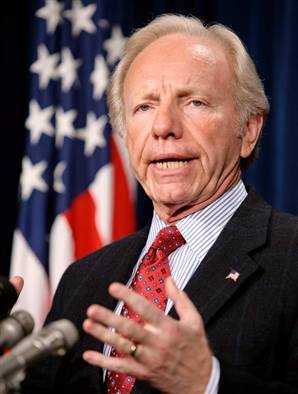
Huntsman doesn't have the stature that Lieberman-- the defeated Vice Presidential nominee in 2000-- had, but he will play just as small a role in his party's nominating process for the same reason, taking too many positions that are offensive to his party's base. Lieberman completely and enthusiastically supported the Iraq War, unlike fellow Senators Kerry and Edwards who voted for the war but then tempered that support in later actions like voting against funding the war (Remember "I voted for the $87 billion before I voted against it?"). Lieberman also drew the ire of many Democrats for being too friendly with the insurance industry and for being too "preachy" in his criticisms of Bill Clinton during the Monica Lewinsky nonsense.
Meanwhile, Huntsman served in the Obama Administration as Ambassador to China. He previously supported the stimulus plan, cap-and-trade, and even individual mandates for health insurance coverage. In a primary electorate dominated by angry, right-wing Tea Partiers who believe Obama is an evil, socialist, America-hating Muslim, he is simply not a viable candidate. Not this year anyway. I agree with my father's theory that Huntsman is running now to position himself as a favorite in 2016, in the event that Bachmann or Perry wins the nomination on the Tea Party platform and then loses to Obama ("Huntsman wants to be Nixon to Bachmann's Goldwater" is how Dad described it).
Both were once leaders of their respective parties in the House of Representatives, and both ran for the White House when they were old, becoming irrelevant, and had tarred images from many years as Washington insiders. Both campaigns had/have a tired feeling to them, and no one seemed/seems exciting about supporting either. Gephardt's campaign at least seemed credible in the run-up to Iowa, but he exited the race after a disappointing 4th place finish there. Gingrich will struggle to even match that performance. His campaign already seems D.O.A. after he torched what little support he had when he criticized the Paul Ryan budget and its plan to turn Medicare into a voucher program... and then didn't even have the guts to stand by his position.
Congressmen Paul and Kucinich are hard-headed ideologues, well outside the mainstream of their parties, who stick to their principles. They have extremely loyal and dedicated followers, a significant percentage of whom are prone to believing in conspiracy theories. They have a few good ideas sandwiched between a lot of nutty ones. Paul has a lot more followers than does Kucinich, but still not enough to seriously contend for his party's nomination.
OK, to be fair to Santorum, he did serve 2 terms in the U.S. Senate, and that makes him slightly more serious than Sharpton. However, he is still a past-his-prime, attention-seeking demagogue with no appeal outside a very narrow slice of one constituency of his party (fundamentalist Christians for Santorum, Black voters for Sharpton). Sharpton facilitated the infamous Tawanna Brawley scandal and has been a notorious race baiter ever since. Santorum once equated homosexuality with bestiality, thus earning himself the nickname "Senator Man on Dog." (Watch this video; it's hysterical.) He also compared Senate filibusters to the Holocaust. And, he wrote a book where he effectively said it would be best for the country if women stayed in the kitchen instead of working. In response to that, the Philadelphia Inquirer called him "one of the finest minds of the 13th century." When last we saw Mr. Santorum, he was losing his Senate seat by 18 points, one of the worst defeats ever suffered by an incumbent Senator. It is both strangely amusing and terrifying that this year, there are candidates running TO THE RIGHT of Rick Santorum.
I know earlier this year, Cain had gotten some measure of support from Tea Party groups and has made a few pundits' "watch out for..." lists, but at the end of the day, he's a token candidate with no chance of winning the nomination. Oh yeah, he's also made a number of extremely bigoted statements about Muslims, like saying he wouldn't appoint any Muslim Americans to work in his administration or to serve as federal judges because they'd impose Sharia law, or that local governments should be allowed to ban mosques. That is truly sickening, almost as sickening as the taste of Godfather's Pizza.
In a few years, no one will remember that Rep. McCotter even ran for president. I bet you didn't even know he was running now!
I Have Returned
Greetings one and all, and welcome to the new online home of my various opinions, rants and musings. Those who have known me a while may remember my old blog, www.xanga.com/syracusewolfman66, a site where I commented on mainly sports and political topics constantly during my college years, and somewhat frequently in my post college, pre law school interregnum. The Xanga site still exists, though I haven’t written there at all in nearly two years. Xanga is about as user-friendly as a Rubik’s cube, so I decided to make my re-entry to the blogosphere on a new platform.
My reasons for abandoning my blog hobby after 1L year and starting up again now sort of mirror one another. The large amount of required writing in law school left me with no motivation to write anything for fun that was longer than a Facebook status. Now, with both law school and the bar exam behind me (the latter hopefully for good), and with the people who shared that experience with me now scattering to the 4 winds, I’m looking for an avenue of creative expression and for a way to maintain some of those collegial ties with my former classmates. Feel free to engage in open, intelligent, and civil debate in the comments sections.
Hope you enjoy reading what I post here. We’ll see how this goes.