Before I get started with my breakdown of the 2012 Republican field, I want to be clear that I am ABSOLUTELY NOT joining the left-wing chorus that has spent the last 2 and 1/2 years claiming that President Obama is no different than President Bush 43. Many progressive Democrats have been kinda of upset with President Obama lately, and I join them in some of their grievances, especially in the area of gay rights. However, many such gripes, and particularly those insinuating that Obama is some type of Republican Manchurian candidate, are utterly absurd.
Anyway, if you are the sort of feather who resides on the left wing, you should remember that, whatever your problems with Obama, in November of 2012 you will have to choose between him and a Republican. With the economy flagging and teetering on the verge of a "double dip" recession, Obama should be ripe for the picking. But luckily for us, this field of GOP candidates, and the primary voters who will be evaluating them and determining Obama's opponent, look like they could very well snatch defeat from the jaws of victory. It's all a little reminiscent of the 2004 cycle. President Bush's post-9/11 popularity boom had faded, support for the Iraq war tanked, and the economy was mediocre at best (especially in the Midwest / Rust Belt). But sadly, the Democrats had a terribly weak field of candidates and wound up nominating John Kerry. He was easily the worst major party presidential candidate since fellow Bay Stater Mike Dukakis in 1988, maybe even since George "at least I won Massachusetts" McGovern in 1972.
Many of the dynamics in the primary campaigns are eerily similar, and the major 2012 GOP candidates all seem to have a closely analogous counterpart from the 2004 Democrats. Observe.
1. M
 itt Romney = John Kerry
These two wealthy Massachusetts-ians are so similar, it's downright creepy. Like his fellow Bay State Blowhard, Romney was his party establishment's favorite candidate going in. But, like Kerry, Romney has been on the wrong side of an issue that makes his party base's blood boil. Kerry voted in favor of the Iraq War, and Romney enacted universal health care coverage with an individual mandate when he was Governor of Massachusetts. Or, as you'll no doubt hear it described in an anti-Romney TV ad sometime in the next 5-6 months, "Before there was Obamacare, there was Romneycare!"
They also have the same weaknesses as candidates. Like Kerry, Romney comes off as arrogant, phony, awkward, and just generally unlikeable. And of course, both are notorious "flip floppers." The late Sen. Ted Kennedy once said "Mitt Romney isn't pro-choice or anti-choice, he's multiple choice." Most politicians are opportunistic at times, and sometimes politicians can genuinely change their views over time and/or in light of new information. Romney, however, has a record of radically changing his stances on many issues, and all the changes seem to follow the same pattern-- "moderate" (and even some liberal) positions during his runs for Senate and Governor in Massachusetts in 1994 and 2002, and right-wing positions during his campaigns for President since 2006. There are entire websites devoted to displaying the contradictory statements of "Massachusetts Romney" and "Presidential Campaign Romney." Here's one such example. While Kerry was admittedly very wishy-washy during his presidential run, I never thought he was as bad as Romney. But, the effectiveness of the campaign that Bush ran against him suggests that a majority of voters thought otherwise.
If Romney wins the Republican nomination, I expect Obama to run virtually the exact same campaign against Romney that Bush ran against Kerry. "Yeah, I may not be perfect, but at least you know what you're getting with me. That guy is all over the place and shifts with the political winds." If the economic picture is bleak enough, Romney could still win. After all, Kerry came within 120,000 votes in Ohio of defeating Bush. However, Romney's chances against Obama will significantly worsen if he does not win the GOP nomination early. The more time he has to spend pandering to the Tea Party, the more "flip flopper" ammo Obama will have against him, and the less credible "Moderate Romney" will look in the general election campaign.
 2. Michele Bachmann = Howard Dean
As the only real candidate who opposed the Iraq war (Dennis Kucinich doesn't count), Dr. Dean surged to the front of the pack in the summer of 2003, on the strength of the anti-war movement and the burgeoning Left-wing "Netroots." Similarly, Bachmann is the charismatic darling of the Tea Party and other "movement conservatives" who are not fond of Mr. Romney. And Bachmann has her party's power brokers shaking in their boots for the same reason Dean frightened the Dem establishment in 03-04: her extreme views probably make her un-electable against Obama. Despite her best efforts to soft-pedal some of her past social conservatism, Bachmann has a long trail of bizarre, borderline insane statements that will follow her. She also can't hide the fact that her husband runs a "pray away the gay" Christian therapy service. While Middle America may not be totally on board with gay marriage yet, the critical general election voters are no longer receptive to outright gay bashing. Even Bush supported civil unions. Combine that with her often tenuous grasp of American history and constitutional principles, and it will be easy for Obama to portray her as extreme and somewhat crazy.
However, I don't think Bachmann's primary campaign will falter like Dean's did. The Dean campaign crashed and burned at the Iowa caucuses for several reasons. First, Kerry's field operation ran circles around Dean's, because Kerry had unions and seasoned, local operatives working for him, while Dean relied on inexperienced kids from out of state. With Bachmann's strong support among Tea Party groups and Evangelical churches, she won't get beat on the ground like that. She was also born in Iowa and lives in neighboring Minnesota, so she has a "home field advantage" that none of the 04 Democrats had (except maybe sort of Dick Gephardt).
Second, what ultimately doomed Dean in Iowa was a sudden fit of pragmatism among caucus participants. Late in 2003, Democratic voters started feeling some buyer's remorse with Dean and questioning his electability. After American soldiers captured Saddam Hussein and temporarily restored a decent percentage of support for the war, that buyer's remorse and strategic thinking intensified. Right as they may have been to doubt Dean's chances, they erroneously believed that Kerry was electable and flocked to him. "Dated Dean, Married Kerry" became a popular catch phrase.
Lastly, even after losing in Iowa, Dean conceivably could have rebounded in New Hampshire and down the line if not for that infamous scream. Neither Bachmann nor any other major presidential candidate is ever going to make that mistake again.
I don't see "Bachmanniacs," and GOP base voters in general making the kind of strategic decision that the 04 "Deaniacs" made. I believe that the Tea Party has overwhelmed the Republican establishment, and they have shown that they do not cast strategic votes for candidates who are "electable" in the minds of non-base voters. They vote with their guts for "true conservatives," consequences be damned. The Tea Party almost surely cost the GOP 3 Senate seats in the 2010 mid-term landslide by nominating Ken Buck in Colorado, Sharron Angle in Nevada, and Christine "Witchy Woman" O'Donnell in Delaware. It'd be one thing if that were only happening in safe Republican states and districts, but those are all states that Obama won in 2008 by healthy margins. Two of the first three GOP contests-- the Iowa Caucuses and South Carolina Primary-- have demographics that favor Bachmann. If she wins both of those two, she will be hard to stop in the primaries. But the next guy on this list is a very serious threat to her.
 3. Rick Perry = Wesley Clark
As Dean-mania swept through the Democratic base in 2003, the Clintons and other Dem establishment figures realized that the only way to stop Dean might be with an anti-war candidate. So, they drafted General Wesley Clark into the race. They figured that if they were "stuck with" the anti-war message, it would be more palatable to Middle America coming from a retired 4-star general than from a little-known Governor of Vermont.
Governor Perry is entering the 2012 race at a similar point in time with the same mission-- stop the un-electable base favorite candidate (Bachmann). Perry is well-liked by the Tea Party, and could certainly cut into Bachmann's support. Accordingly, he holds many far right views and has said some crazy stuff in the past. (Like suggesting that Texas should secede from the union. I wish they would.) But regardless of where you think his actual level of craziness is, his perceived level of craziness if far lower than Bachmann's, and perception is reality in political campaigns.
There are also some critical differences between Perry and Clark. While Clark had never so much as run for elected office before, Perry has been campaigning since 1984. In Texas, he won 3 gubernatorial elections, 3 other statewide elections, and 3 terms in the state legislature. Clark's candidacy looked great on paper, but it faltered once he had to meet voters and take positions and do all the other legwork that is campaigning. Perry will not have that problem. Also, while both Clark and Perry have ties to their party's last president, including being from the same state, Perry and Bush apparently do not like each other at all.
Perry is a real threat to win the GOP nomination, and I think his chances in the general election are about the same as Romney's. Perry definitely has superior personality and people skills to Romney, and his humble upbringing in rural West Texas is a good asset. His greatest weakness as a general election candidate is being too much like George W. Bush. They were both Republican Texas Governors, and they have similar body language, campaign styles, and even voices. The sentiment among most "swing" voters right now is "everyone and everything sucks." While these voters aren't thrilled with Obama, that doesn't necessarily mean they want to go back to Bush.

 4. Tim "T-Paw" Pawlenty = John Edwards
Editor's Note: T-Paw ended his candidacy on August 14, 2011.
Let's get this out of the way first. I am ashamed to admit that I supported Edwards for president in 2004 (at least I didn't in 2008, unlike the more gullible members of my family).
Both of these candidates looked promising on paper but fizzled out early and became mired in the 2nd tier of candidates by mid summer. Like Edwards, Pawlenty was one of his party's finalists for vice president in the last election. Like Edwards, he comes from a humble, working class background and hails from a state where his party seldom wins in Presidential elections (Obama's narrow win in North Carolina in 2008 was the first Dem victory there since 1976. Minnesota has voted GOP in only 1 election since 1956.). But, like Edwards, Pawlenty's campaign has failed to gain traction, and commentators are accusing him of being too nice and "running for Vice President."
While Edwards was a non entity at this point in the 04 cycle, he started building momentum about a month before the Iowa caucuses. He went on to finish 2nd in Iowa, win South Carolina, and put up a good enough fight against Kerry over the next few months to earn a spot as Kerry's running mate. I don't see T-Paw making a similar recovery. Edwards' charisma and speech-making skills made him an excellent retail campaigner, which is critically important in Iowa and New Hampshire. That allowed him to build support without having to raise a ton of money. T-Paw does not have Edwards' charisma, nor does he have any issue or experience that distinguishes him from the rest of the field. I see him finishing 3rd or 4th in Iowa and then ending his candidacy.
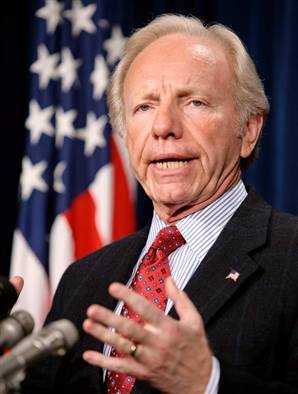
 5. Jon Huntsman = Joe Lieberman
Huntsman doesn't have the stature that Lieberman-- the defeated Vice Presidential nominee in 2000-- had, but he will play just as small a role in his party's nominating process for the same reason, taking too many positions that are offensive to his party's base. Lieberman completely and enthusiastically supported the Iraq War, unlike fellow Senators Kerry and Edwards who voted for the war but then tempered that support in later actions like voting against funding the war (Remember "I voted for the $87 billion before I voted against it?"). Lieberman also drew the ire of many Democrats for being too friendly with the insurance industry and for being too "preachy" in his criticisms of Bill Clinton during the Monica Lewinsky nonsense.
Meanwhile, Huntsman served in the Obama Administration as Ambassador to China. He previously supported the stimulus plan, cap-and-trade, and even individual mandates for health insurance coverage. In a primary electorate dominated by angry, right-wing Tea Partiers who believe Obama is an evil, socialist, America-hating Muslim, he is simply not a viable candidate. Not this year anyway. I agree with my father's theory that Huntsman is running now to position himself as a favorite in 2016, in the event that Bachmann or Perry wins the nomination on the Tea Party platform and then loses to Obama ("Huntsman wants to be Nixon to Bachmann's Goldwater" is how Dad described it).
 6. Newt Gingrich = Dick Gephardt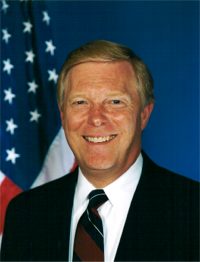
Both were once leaders of their respective parties in the House of Representatives, and both ran for the White House when they were old, becoming irrelevant, and had tarred images from many years as Washington insiders. Both campaigns had/have a tired feeling to them, and no one seemed/seems exciting about supporting either. Gephardt's campaign at least seemed credible in the run-up to Iowa, but he exited the race after a disappointing 4th place finish there. Gingrich will struggle to even match that performance. His campaign already seems D.O.A. after he torched what little support he had when he criticized the Paul Ryan budget and its plan to turn Medicare into a voucher program... and then didn't even have the guts to stand by his position.
 7. Ron Paul = Dennis Kucinich
Congressmen Paul and Kucinich are hard-headed ideologues, well outside the mainstream of their parties, who stick to their principles. They have extremely loyal and dedicated followers, a significant percentage of whom are prone to believing in conspiracy theories. They have a few good ideas sandwiched between a lot of nutty ones. Paul has a lot more followers than does Kucinich, but still not enough to seriously contend for his party's nomination.
 8. Rick Santorum = Al Sharpton
OK, to be fair to Santorum, he did serve 2 terms in the U.S. Senate, and that makes him slightly more serious than Sharpton. However, he is still a past-his-prime, attention-seeking demagogue with no appeal outside a very narrow slice of one constituency of his party (fundamentalist Christians for Santorum, Black voters for Sharpton). Sharpton facilitated the infamous Tawanna Brawley scandal and has been a notorious race baiter ever since. Santorum once equated homosexuality with bestiality, thus earning himself the nickname "Senator Man on Dog." (Watch this video; it's hysterical.) He also compared Senate filibusters to the Holocaust. And, he wrote a book where he effectively said it would be best for the country if women stayed in the kitchen instead of working. In response to that, the Philadelphia Inquirer called him "one of the finest minds of the 13th century." When last we saw Mr. Santorum, he was losing his Senate seat by 18 points, one of the worst defeats ever suffered by an incumbent Senator. It is both strangely amusing and terrifying that this year, there are candidates running TO THE RIGHT of Rick Santorum.
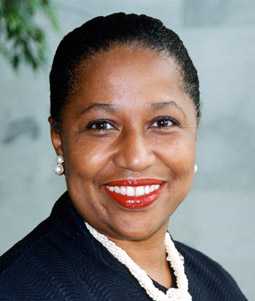
 9. Herman Cain = Carol Mosely Braun
I know earlier this year, Cain had gotten some measure of support from Tea Party groups and has made a few pundits' "watch out for..." lists, but at the end of the day, he's a token candidate with no chance of winning the nomination. Oh yeah, he's also made a number of extremely bigoted statements about Muslims, like saying he wouldn't appoint any Muslim Americans to work in his administration or to serve as federal judges because they'd impose Sharia law, or that local governments should be allowed to ban mosques. That is truly sickening, almost as sickening as the taste of Godfather's Pizza.

 10. Thaddeus McCotter = Bob Graham
In a few years, no one will remember that Rep. McCotter even ran for president. I bet you didn't even know he was running now!

No comments:
Post a Comment